
Skip to content
727-207-1749FL license JB164932
Ultimate Pest Management technician ant pointing his sprayer wand up

Licensed in FloridaJB164932

How we treat your home

We treat where pests live, not where you live.

We do not spray chemicals along your baseboards. We find where pests hide, travel and get in, and we place treatment right there: inside your walls, under your cabinets, in cracks and at the openings outside.

Treatment belongs where pests are, not where your family is.

Roaches, ants and spiders spend most of their time out of sight: inside walls, under cabinets and in cracks. That is where we put treatment.

What we do not do.

We do not spray the open room.

Spraying along baseboards and floors puts treatment on the open surfaces your family walks on and your pets lie on. The pests are usually somewhere else: inside the wall, under the cabinet or behind the appliance.

What we do.

We place treatment where pests are.

We put treatment inside wall voids, under cabinet edges, behind appliances, in cracks and seams, and at the openings outside. Each placement goes where pests hide, travel or get in.

This is precision pest control at an affordable price.

We plan every treatment with your family and pets in mind.

Here is where treatment goes in your home.

Each number is a place pests hide, travel or get in. Select a number to see how we treat it.

Each red number is a place we put treatment.We do not spray the open rooms your family uses.

  1. Flashlight inspection
  2. Monitors under sinks
  3. Bait inside the wall
  4. Dust in wall cracks
  5. Gel bait under cabinets
  6. Deep cabinet corners
  7. Behind the refrigerator
  8. Into the corner seam
  9. Wall and door frame cracks
  10. Sealing pipe gaps
  11. Door thresholds
  12. Locked bait stations

Step one

We find the problem before we treat it.

Treatment only works where pests actually are, so we start by looking. We check the places pests hide, the paths they travel and the gaps they use to get in.

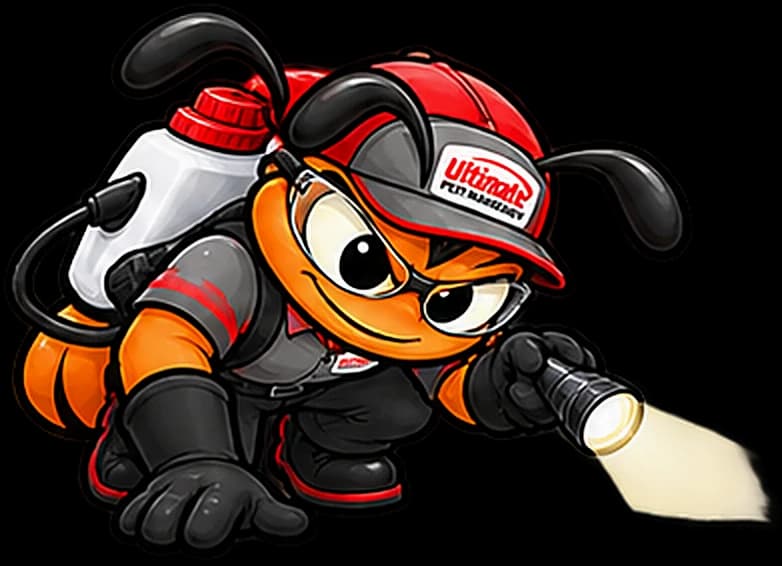
The Ultimate technician ant kneeling with a flashlight, inspecting low and close to the floor.

We inspect with a flashlight before anything else.

Under sinks, behind appliances, in the garage and along the outside walls.

Why there

Pests leave signs where they live: droppings, trails, egg cases and shed skins. A close look tells us which pest it is and where it is living.

How we do it

We look before we treat, so treatment goes to the places that need it, not across your whole home.
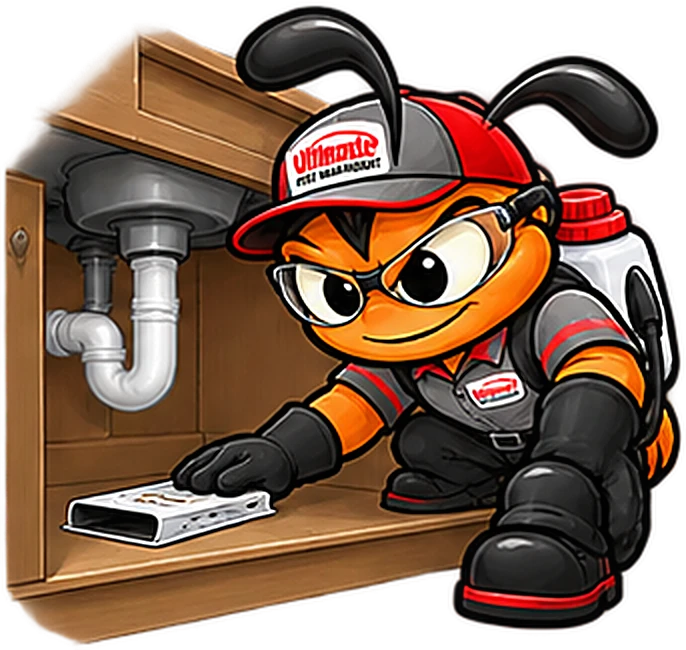
The technician ant sliding a flat monitor card under a kitchen sink, beside the drain pipe.

We set monitors where pests travel.

Under kitchen and bathroom sinks, where the pipes come through the wall.

Why there

The gaps around plumbing under a sink give pests water, warmth and a path in from the wall. A monitor is a small sticky card that catches what moves along that path.

How we do it

A monitor shows what is active and where, so the next treatment is based on evidence instead of guesswork.

Inside your walls

We treat inside your walls, where pests travel.

Pests nest and move inside hollow walls, out of sight and out of reach. Treatment placed there sits on the paths they use every day.

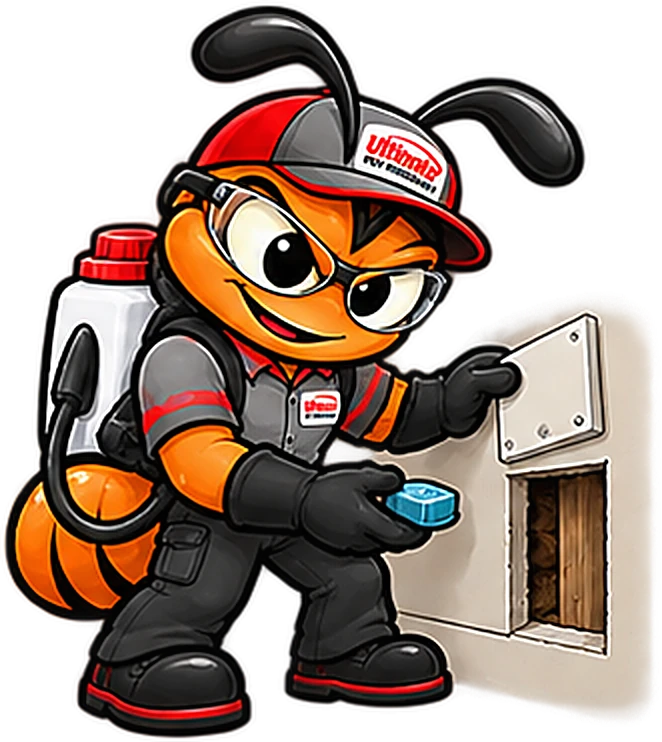
The technician ant holding a bait block at an open wall access panel, ready to place it inside the wall.

We place bait inside the wall, through an access point.

Inside the hollow wall, through an existing access panel or cover plate.

Why there

Pipes and wires run through hollow walls, and pests use those runs as protected paths between rooms.

How we do it

We open an existing access point, place bait inside the wall where pests travel and close it back up. The bait stays inside the wall, out of sight.

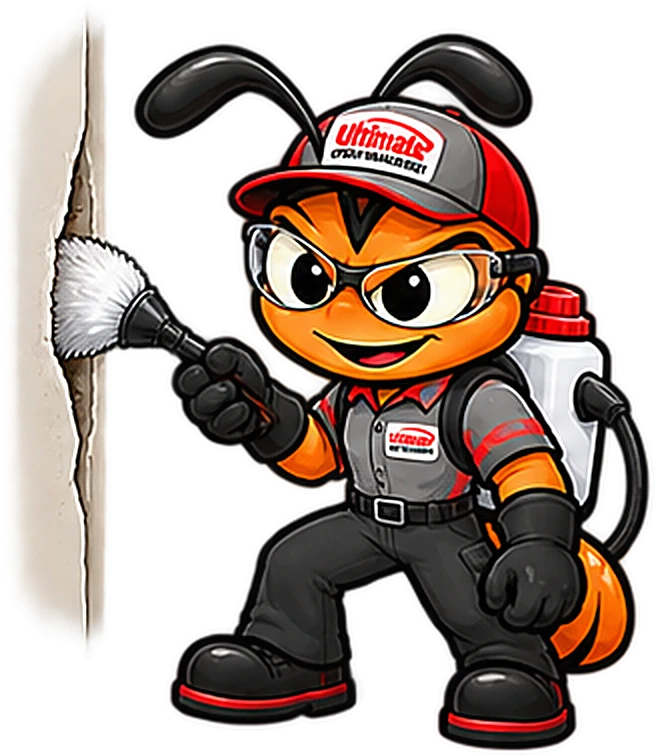
The technician ant using a duster brush on a crack that runs down a wall.

We dust the cracks that lead into the wall.

Cracks and gaps in walls, corners and trim.

Why there

A crack in a wall is often a doorway to the hollow space behind it, where pests nest.

How we do it

A duster puts a fine, light layer into the crack and the space behind it. It stays inside the wall, on the path pests use.

In your kitchen

We treat your kitchen where pests hide, not where you cook.

Kitchens give pests food, water and warmth. We treat the hidden edges of the room: under the cabinets, in the corners and behind the appliances, not the counters and floors you use.

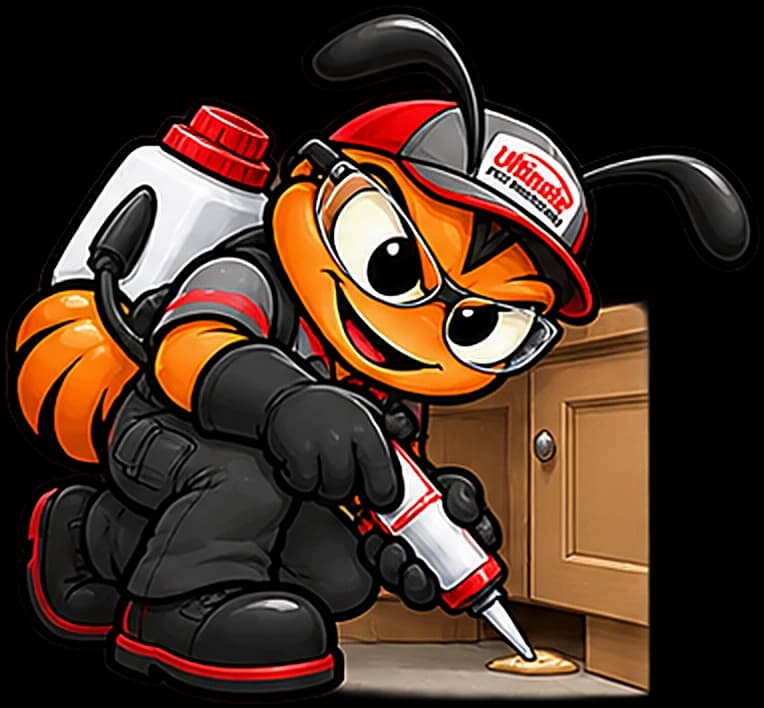
The technician ant kneeling at a kitchen base cabinet, placing gel bait in the gap under the cabinet edge.

We place gel bait under the cabinet edge.

The toe-kick gap under your base cabinets.

Why there

The dark gap under base cabinets is warm, close to food and rarely disturbed, which makes it a favorite hiding place for roaches.

How we do it

We place small dots of gel bait right in that gap. Ants carry bait back to the colony, and roaches feed on it where they hide, so the treatment reaches pests you never see.

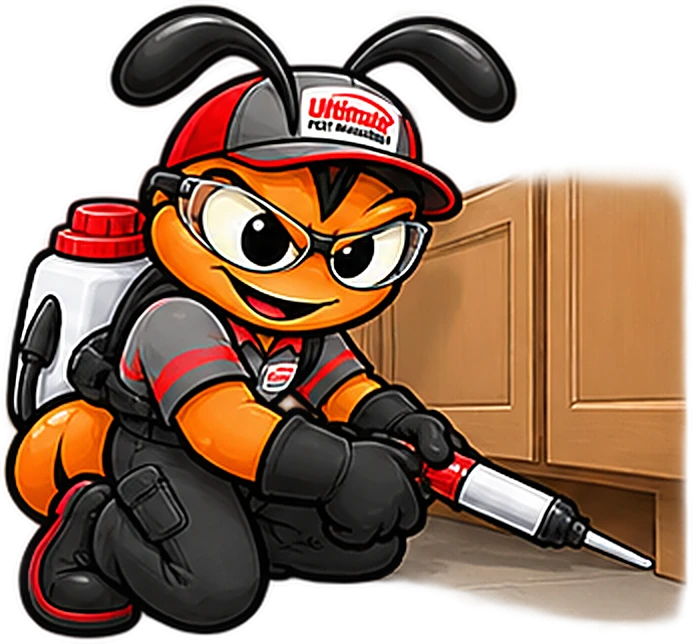
The technician ant kneeling with a long-tip applicator, reaching into the seam where a cabinet meets the floor.

We reach the deep corners with a long-tip applicator.

The seams where cabinets meet the wall and the floor.

Why there

The back corners of cabinets and the seams beside them are hard to reach and easy for pests to use.

How we do it

A long, narrow tip lets us place bait deep in the seam itself instead of on the surface around it.

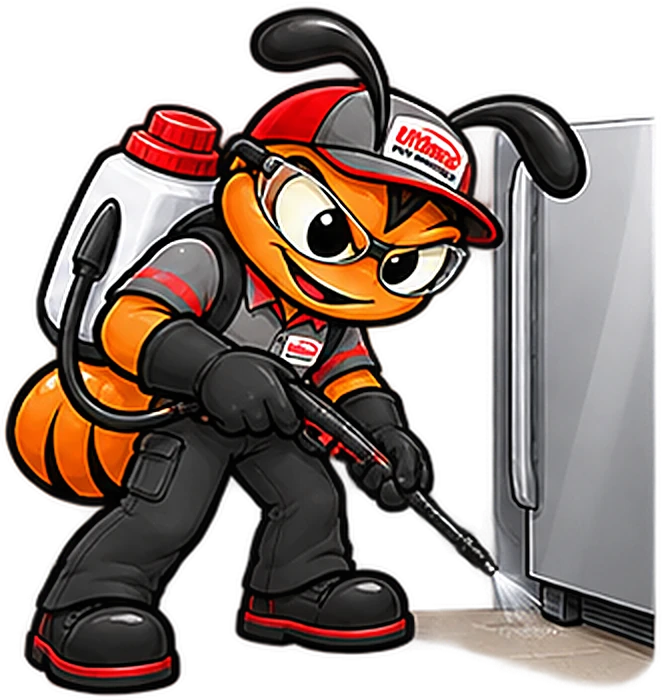
The technician ant aiming a pinpoint wand into the gap at the base of a refrigerator.

We treat under and behind the refrigerator.

The gap at the base of the refrigerator and other appliances.

Why there

Appliances give off warmth, collect crumbs and often sit near a water line. The space under and behind them is one of the first places we look in a kitchen.

How we do it

We aim a fine, pinpoint application into the gap at the base of the appliance, where pests shelter, not across your kitchen floor.

Cracks and seams

We treat into the seam, not along the open room.

Pests follow edges. They travel inside the seams where walls, trim and floors meet. A pinpoint application goes into the seam itself, which is the opposite of spraying a band along your baseboards.

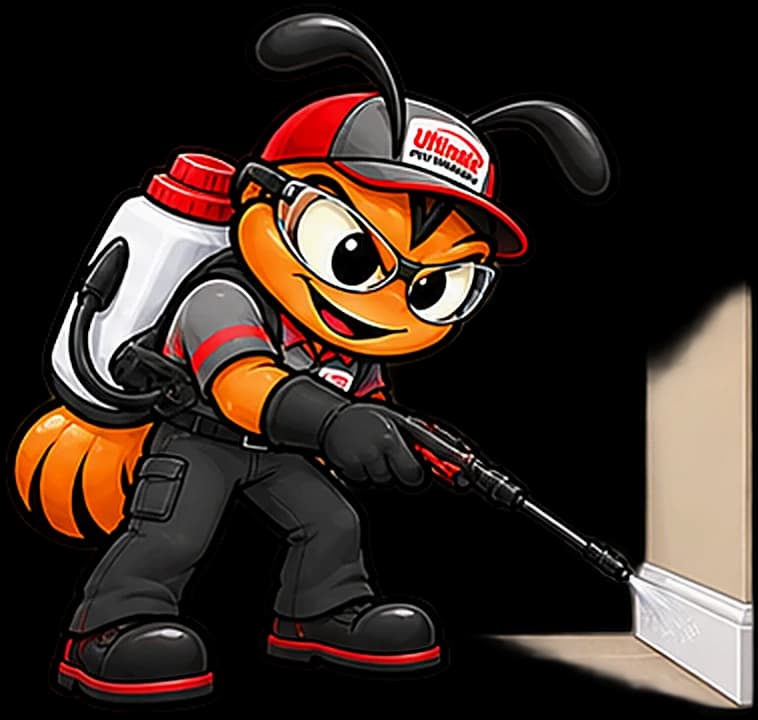
The technician ant aiming a pinpoint wand into the joint where the baseboard meets the wall corner.

We treat into the corner seam, not along the baseboard.

The joint where trim, wall and floor meet.

Why there

Spraying along a baseboard coats the open surface where you walk and your pets lie down. The pests are not on that surface. They are in the gap behind it.

How we do it

A pinpoint tip places treatment into the joint itself. That is how we can say we do not spray chemicals along your baseboards.

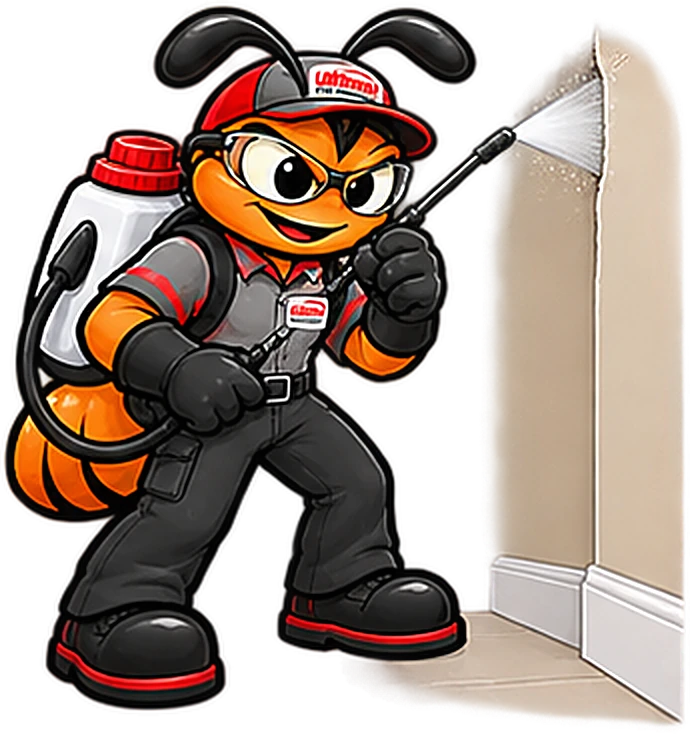
The technician ant directing a fine application into a crack along a wall edge.

We treat the cracks along walls and door frames.

Cracks along door frames, corners and wall seams.

Why there

Ants and spiders follow the straight lines of a home. Cracks along door frames and corners connect rooms and lead into the walls.

How we do it

We direct a fine application into the crack, so it sits where pests travel instead of on the wall around it.

Outside your home

We stop pests at the outside of your home.

Many of the pests that end up inside start outside. We close small openings and treat the places pests use to get in, and we come back in month 6 to retreat and set up a perimeter barrier around your home.

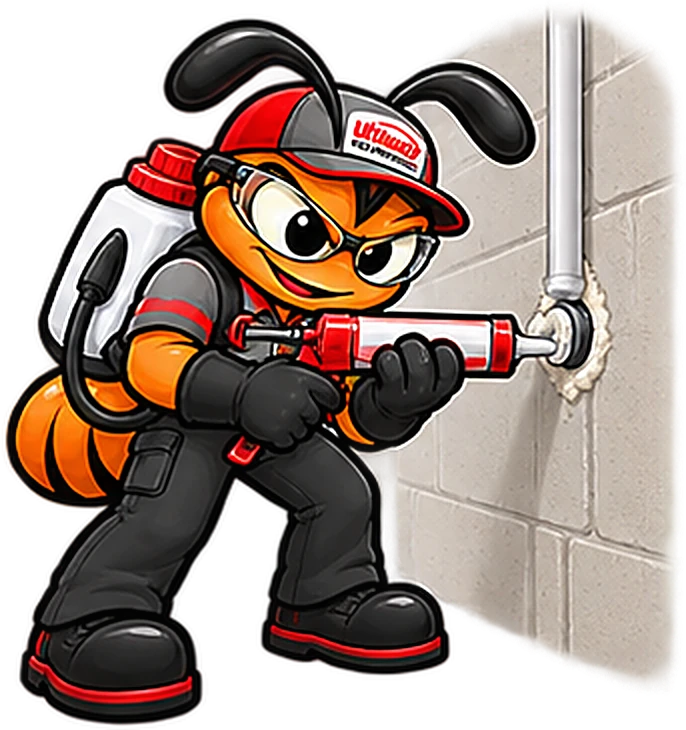
The technician ant sealing the gap around a pipe where it enters a block wall outside.

We seal the gaps where pipes enter your home.

Where plumbing, wiring and lines pass through the outside walls.

Why there

A gap around a pipe is an open door for pests. Closing it means fewer pests get in to begin with.

How we do it

We seal small gaps around pipes and lines, and we point out larger openings so you can have them repaired.

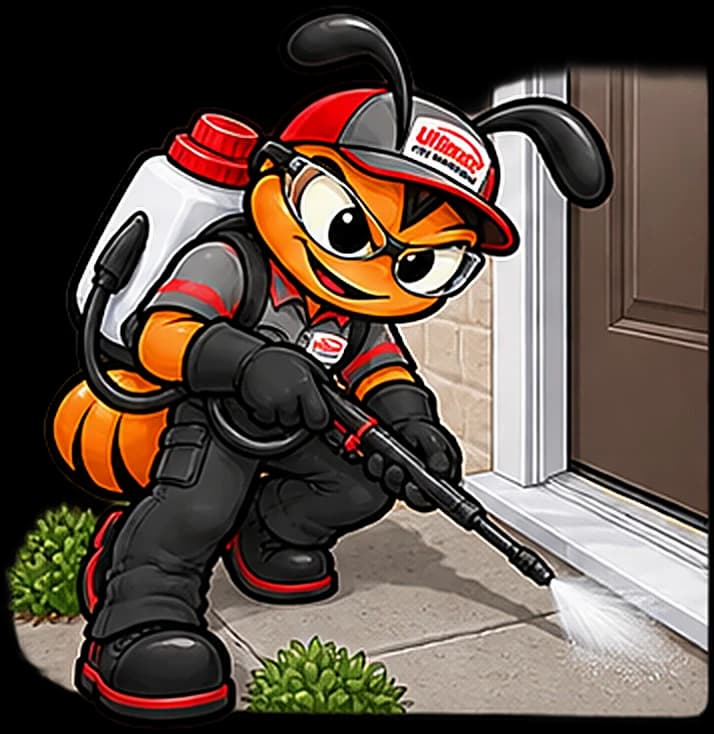
The technician ant treating the threshold at the bottom of an outside door.

We treat the thresholds and edges of your doors.

Door thresholds and the gaps at the edges of your entryways, outside.

Why there

Doors are where the outside meets the inside. Gaps under thresholds and around frames are some of the most-used ways in.

How we do it

We place a targeted application at the threshold and the gaps at its edges, outside. At your month 6 visit, this is part of the perimeter barrier we set up around your home.

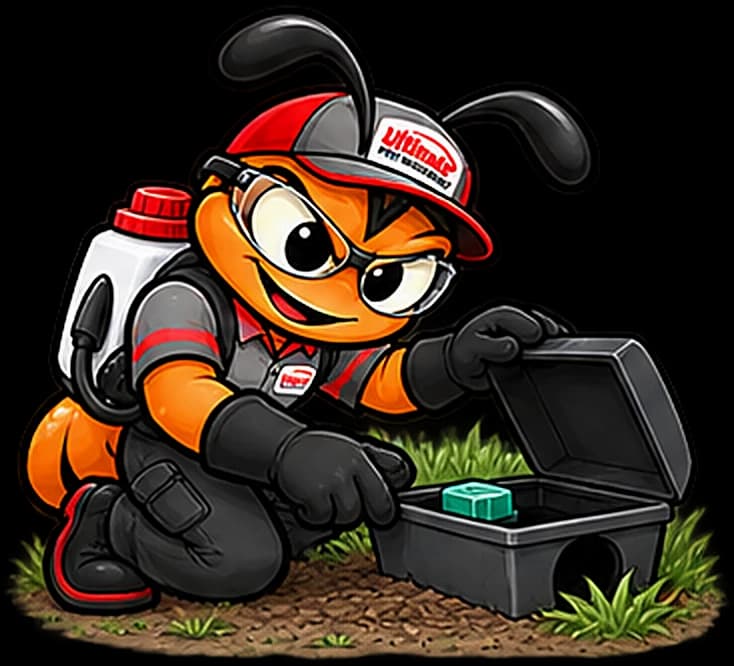
The technician ant kneeling in a mulch bed beside an opened, locked bait station.

We use locked bait stations outside when rodents are a concern.

Along the foundation and in landscaped beds, outside.

Why there

Rodents travel along foundations and through mulch beds. A station puts the bait on that path.

How we do it

The bait sits inside a locked box instead of loose on the ground. We talk with you about rodent work at your estimate.

Licensed and certified

A licensed specialist treats your home.

Pest control in Florida is licensed work. It should be done by someone who has made it a profession, and at our business that is the owner.

The State of Florida licenses our business.

Florida licenses every pest control business. Ours is license JB164932, for general household pest and rodent control.

The owner is a certified pest control operator.

Mike Cirillo has held his Florida certification as a pest control operator since 1997. Florida awards that certification by state examination, and it must be renewed every year through continuing education in pest control law, safety, pesticide labels and integrated pest management, or a new state examination.

The certified operator makes the treatment decisions.

Under Florida law, the certified operator in charge chooses the products for each job and is responsible for how they are used. At our business, that is Mike, and he is also the one who treats your home.

Pest control has been his profession since 1997.

The person who answers your call, plans your treatment and comes to your home is the same licensed professional who owns the business.

State of Florida

Pest Control Business License

JB164932

Business
Ultimate Pest Management
Category
General Household Pest and Rodent Control
Certified operator
Mike Cirillo, the owner, since 1997
Issued by
Florida Department of Agriculture and Consumer Services

You can look up license JB164932 with the Florida Department of Agriculture and Consumer Services.

Here is how treatment fits your yearly program.

  1. Month 1

    We do your first treatment.

    We inspect your home and plan the first treatment around what we find, inside and out.

  2. Month 6

    We come back to retreat.

    We come back in month 6 to retreat and set up a perimeter barrier around your home. This visit is included in your yearly program.

  3. Any month

    Service calls are always free.

    Service calls are always free for yearly customers. If you find a pest after our treatment, call us or report it online, and we come back out and take care of it.

Here are answers about our treatment.

Do you spray inside my home?

We do not spray chemicals along your baseboards or across your floors. Inside, we place treatment in the hidden spaces pests use: inside wall voids, under cabinet edges, behind appliances and in cracks and seams.

What about my kids and pets?

We plan every treatment with your family and pets in mind. We place treatment inside walls, under cabinets, behind appliances and in cracks, rather than on the open floors and surfaces your family and pets use. Ask Mike anything about your treatment, and he will tell you where it goes and what your household needs to do before and after the visit.

Is Ultimate Pest Management licensed?

Yes. We hold Florida pest control business license JB164932 for general household pest and rodent control. Mike Cirillo, the owner, has been a Florida certified pest control operator since 1997.

Who will treat my home?

Mike, the owner. The business is owner-operated, so the licensed operator who answers your call is the one who treats your home.

Why do you use bait instead of spraying?

Bait goes where pests feed and travel. Ants carry it back to the colony, and roaches feed on it where they hide, so a small, targeted placement reaches pests we cannot see.

Will I see the treatment?

Most of it is out of sight, inside walls, under cabinet edges, behind appliances and in cracks. Outside, you may notice sealed gaps around pipes and, if rodents are a concern, a locked bait station.

Do you treat the outside of my home?

Yes. We seal small gaps where pipes enter, treat thresholds and entry points, and come back in month 6 to retreat and set up a perimeter barrier around your home. That visit is included in your yearly program.

Can I get a one-time treatment?

No. Our pest service is a yearly program, not a single visit. We do not provide termite services.

Ultimate Pest Management technician ant with a backpack sprayer

Your yearly program starts with one call.

Chase the ant army away from the house.

Spray smoke to send the orange ants packing.

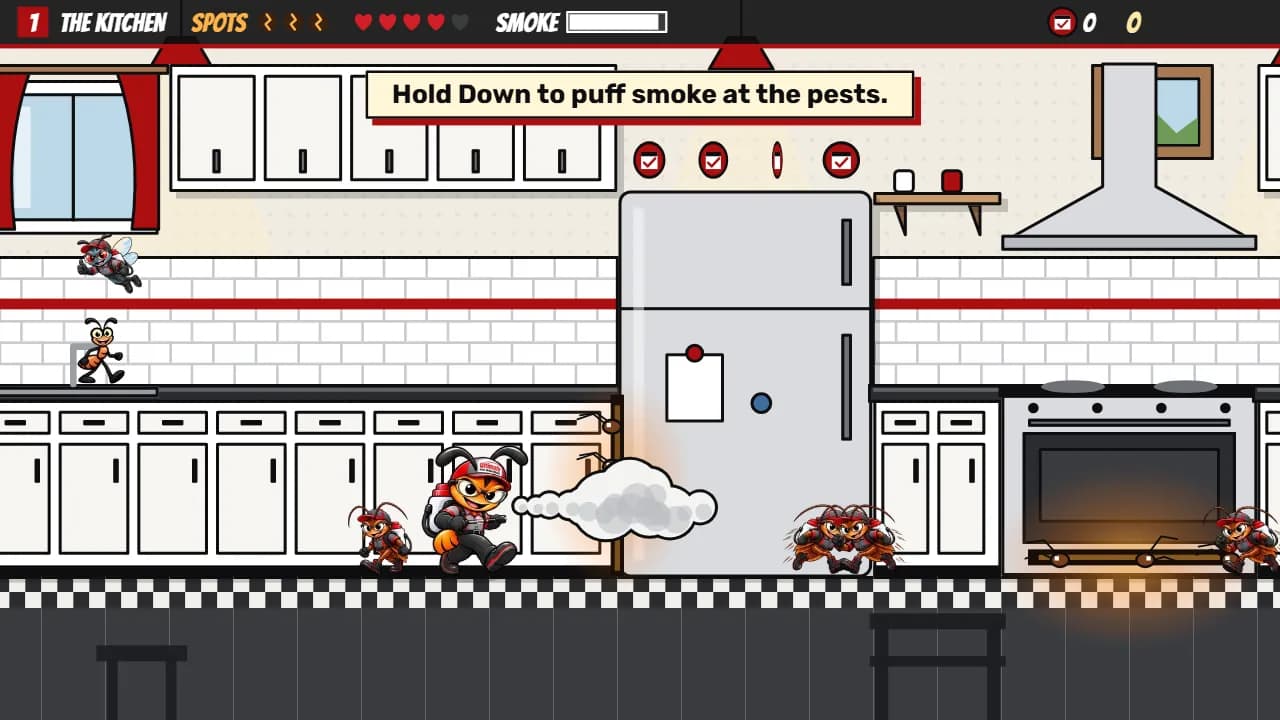
A scene from the game: roaches pour out from behind the refrigerator while the technician puffs smoke from his sprayer in the kitchen.
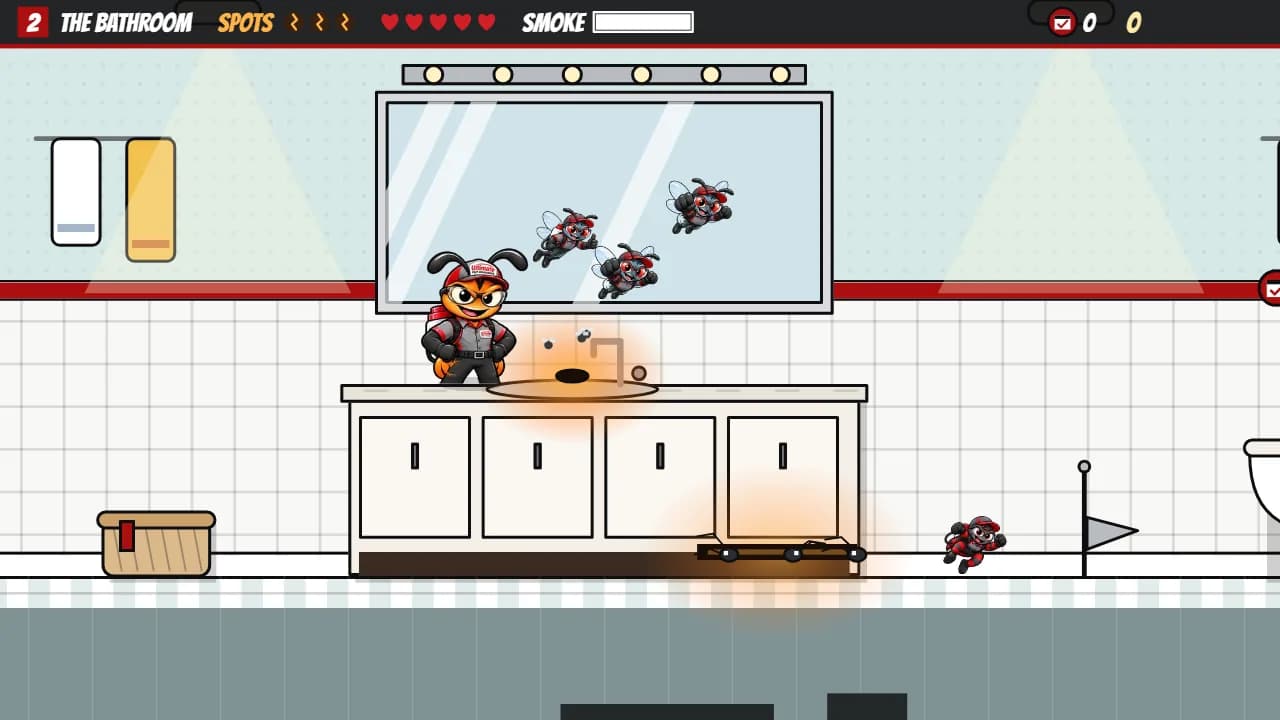
  1. The bathroom: drain flies around the sink drain and a glowing spot under the vanity.2 Bathroom
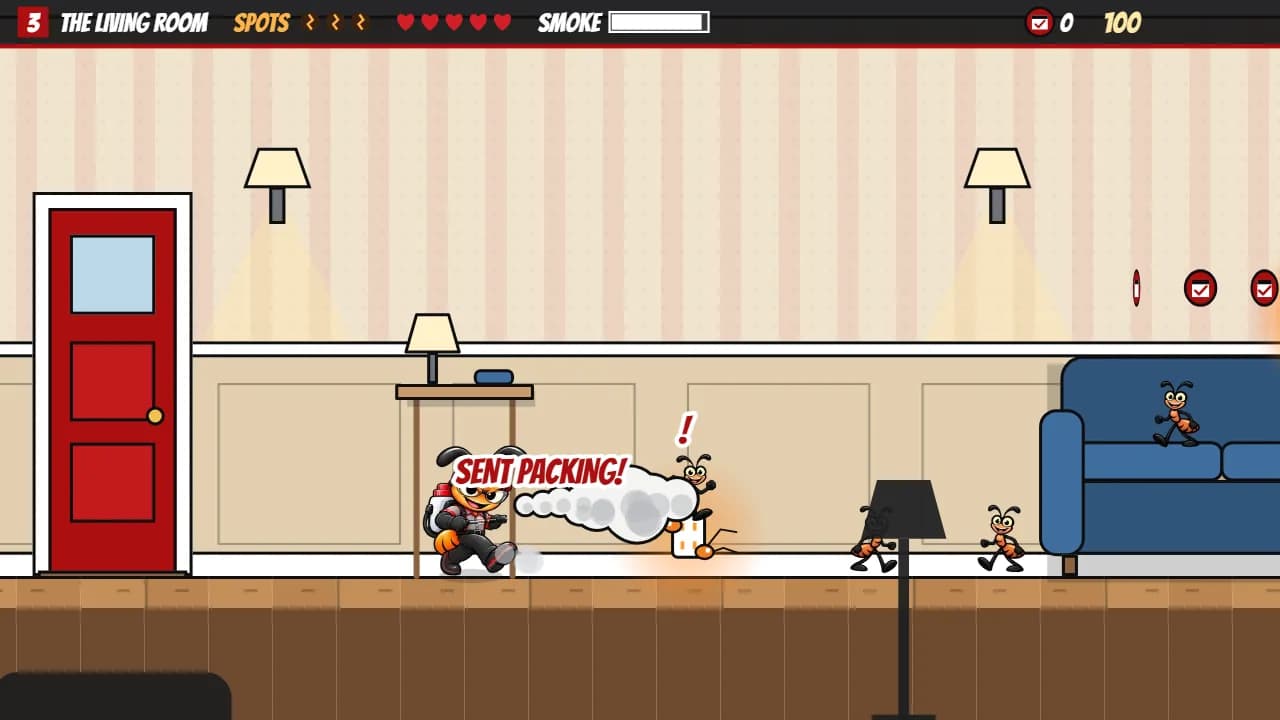
  2. The living room: an ant trail coming out of a wall outlet next to the couch.3 Living room
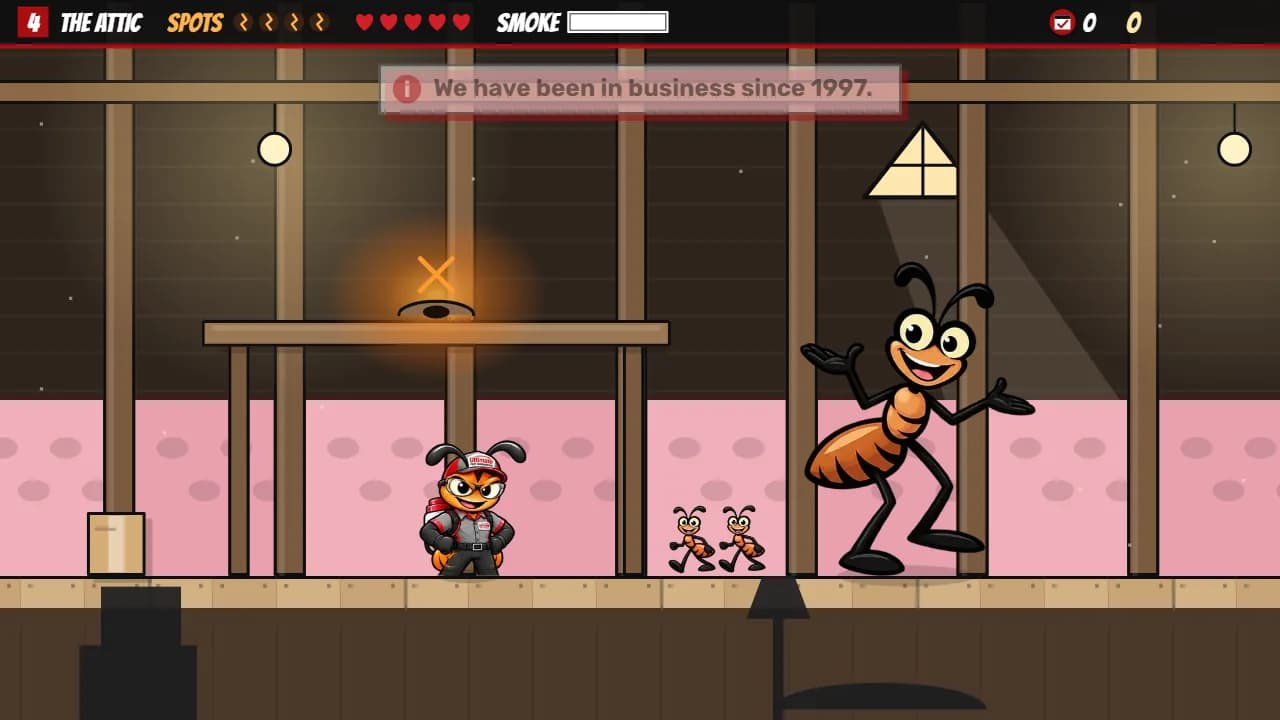
  3. The attic: the big orange ant and his crowd under the rafters.4 Attic

Ultimate: House Patrol

Clear the house, room by room.

Run through the kitchen, the bathroom, the living room and the attic. Puff smoke to send the pests packing, then find the glowing hiding spots (behind the fridge, under the stove, in the drains) and set a trap or treat the spot so no more come out. The big orange ant is waiting in the attic.

Use the Left and Right arrows to run and Space to jump. Down is the action key: hold it to puff smoke, or press it at a glowing spot to set a trap.

Turn your phone sideways to play.

Call 727-207-1749CallReport a pestReportPlay